Arca-Swiss Compatible Ball Head
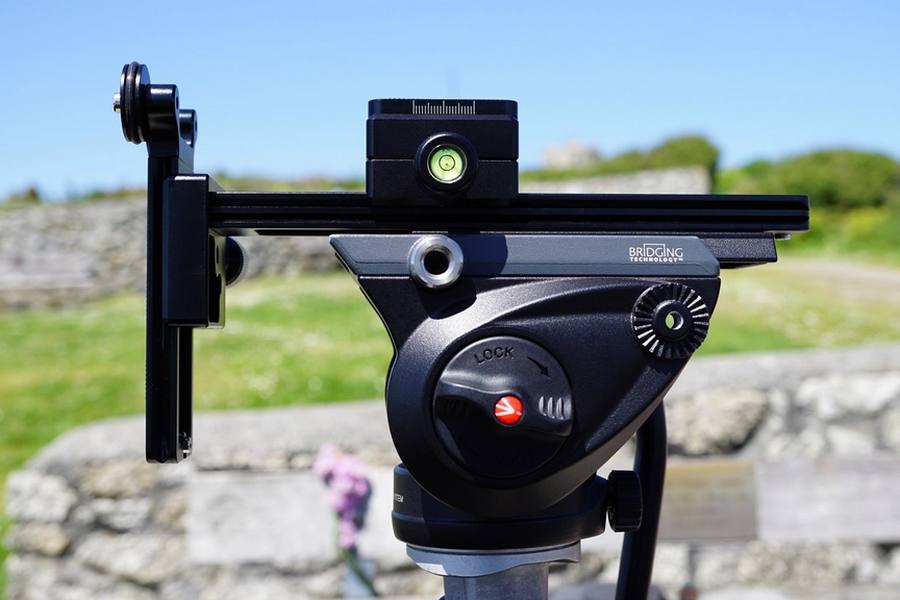
Representative image (stock photo); not the exact product.
Arca-Swiss Is A Standard, Not A Brand
Arca-Swiss describes a dovetail plate profile that most manufacturers now use, which means a plate from one brand fits a clamp from another.
That interoperability is genuinely valuable. Proprietary quick release systems lock you into one manufacturer for every plate, L-bracket, clamp and accessory, and replacing a lost plate becomes a search rather than a purchase.
Choosing Arca-Swiss compatible equipment throughout means the system keeps working as you replace pieces over years, which for something bought incrementally matters more than any single component specification.
Why A Ball Head
A ball head allows movement in every direction at once with a single locking knob, which makes recomposing fast.
That speed is the advantage and the limitation — you cannot adjust one axis without loosening all of them, which for careful levelling of an architectural shot is frustrating.
For general photography, travel and anything where speed matters, a ball head is the right choice. For precise repeatable adjustment, a geared head does that job properly and slowly.
Independent Panning Matters
A separate panning base rotates the head horizontally without disturbing the ball, which is what makes level panoramas possible.
Without it, panning means unlocking the ball and trying to rotate only horizontally, which inevitably introduces tilt and ruins a panorama sequence.
It is also useful for video-style pans and for tracking a moving subject horizontally, and a head without it is meaningfully less capable.
Load Rating And Real Use
Stated load ratings are usually measured with the camera pointing straight up, which is the easiest orientation. The demanding case is a long lens pointed sideways, where the load acts as leverage.
The practical guidance is to buy a head rated well above your heaviest combination rather than at it, since a head at its limit will creep under load — the camera slowly drooping after you lock it.
Creep is the specific failure to look for, and a head that holds a heavy lens without any sag when locked is doing what you paid for.
L-Brackets And What They Add
An L-bracket attaches to the camera and provides Arca-Swiss dovetails on both the bottom and the side, so the camera can be mounted vertically without tilting the head sideways.
Tilting a ball head into its side notch to shoot vertically moves the camera off the tripod centre and is the least stable configuration available.
An L-bracket keeps the camera centred in both orientations, and for anybody who shoots vertical frequently it is a more significant upgrade than a better head.
Plate security deserves a mention because it is a genuine failure point. A plate tightened with a coin or fingers works loose over a day of shooting, and a camera that rotates on its plate under a heavy lens will eventually slide out of the clamp entirely. Plates with a folding D-ring that can be hand-tightened properly, and clamps with a safety stop that prevents the plate sliding clear when loosened, both address a failure that destroys equipment.
The Verdict
The right head standard to build on: interoperable plates and clamps across brands, fast single-knob adjustment, and independent panning for level panoramas.
A ball head cannot adjust one axis alone, load ratings overstate real capability, and creep under heavy lenses is the failure to watch for.
Buy Arca-Swiss compatible everything, and add an L-bracket. Between them they make vertical shooting stable and every future purchase compatible.
At a glance
Pros
- Industry-standard dovetail works across brands
- Fast single-knob adjustment in every direction
- Independent panning base enables level panoramas
- Plates, clamps and L-brackets all interchangeable
Cons
- Cannot adjust one axis without loosening all
- Stated load ratings overstate real sideways capability
- Cheaper heads creep under heavy lenses
- Less precise than a geared head for architecture
Frequently asked questions
What is Arca-Swiss?
A dovetail plate profile most manufacturers now use, so a plate from one brand fits a clamp from another. Proprietary systems lock you into one manufacturer for every plate and accessory, which matters for equipment bought incrementally over years.
Why do I need independent panning?
To make level panoramas. Without a separate panning base you must unlock the ball and try to rotate only horizontally, which inevitably introduces tilt and ruins the sequence. It also helps with video-style pans.
What is creep?
The camera slowly drooping after you lock the head, which happens when the head is at its load limit. Buy one rated well above your heaviest combination rather than at it — stated ratings are measured pointing straight up, which is the easy case.
Specifications
| Standard | Arca-Swiss dovetail, cross-brand |
| Type | Ball head |
| Panning | Independent base |
| Adjustment | Single locking knob, all axes |
| Load rating caveat | Measured pointing up; sideways is harder |
| Failure mode | Creep under load |
| Pairs with | L-bracket for vertical shooting |
| Alternative | Geared head for precision work |
The bottom line
Buy Arca-Swiss compatible everything so future purchases work together, and add an L-bracket for stable vertical shooting.
Check Price on Amazon