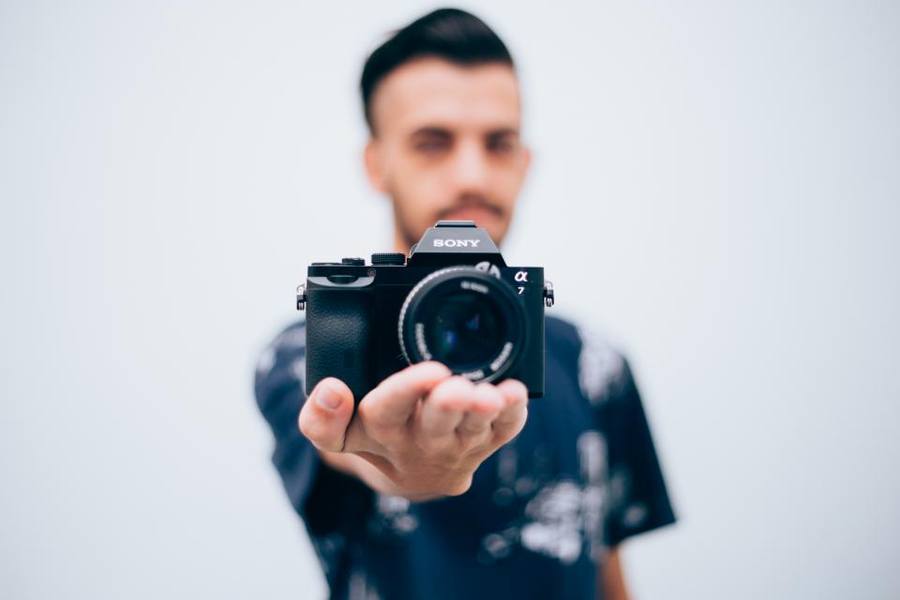
Image illustrative (photo de stock) ; ce n'est pas le produit exact.
Weather Sealing That Is Actually Trusted
Most cameras claim weather resistance and most owners still put them away in rain. OM System bodies and lenses are sealed to a standard that users genuinely shoot with in sustained rain.
For landscape, hiking and wildlife photography that changes what is possible — the conditions that produce the most interesting light are often the conditions that send other photographers indoors.
That reputation is earned through a specific rating rather than a marketing phrase, and it is the clearest reason to choose this system over a technically superior sensor in a less protected body.
The Sensor Size Trade, Honestly
Micro Four Thirds sensors are a quarter the area of full frame, which means roughly two stops less light-gathering and correspondingly worse high-ISO performance.
That is a real limitation and not a small one. In good light the difference in output is minor; in dim conditions full frame is substantially cleaner.
What the smaller sensor buys is dramatically smaller and lighter lenses for equivalent reach, which is why a full wildlife or travel kit fits in a bag that a single full-frame telephoto would fill.
Computational Features Worth Having
Live ND simulates a neutral density filter in camera, letting you blur water or crowds without carrying filters. High resolution mode combines multiple frames into a much higher resolution file.
Handheld starry sky autofocus and in-camera focus stacking solve problems that otherwise require tripods, software and time.
These are not gimmicks — they are genuine capabilities that reduce what you carry and what you do afterwards, and they partly compensate for the sensor size disadvantage.
Stabilisation Is Outstanding
In-body stabilisation here is among the best in any camera, allowing handheld shots at shutter speeds that would require a tripod on most systems.
That is another way the system compensates: a smaller sensor gathers less light, and extraordinary stabilisation lets you use much slower shutter speeds to make up some of it for static subjects.
It does not help with moving subjects, where a fast shutter is required regardless, which is where the sensor size limitation is least avoidable.
Who It Suits
This suits hikers, travellers, and wildlife photographers who carry their kit long distances and shoot in weather.
It suits less well low-light work, indoor events, or anybody wanting the shallowest possible depth of field, where the physics favour larger sensors.
It suits particularly well anybody who has stopped carrying a larger system because of its weight, which is the most common reason serious photographers take fewer photographs.
The Verdict
The system to choose when weight and weather matter most: genuinely trusted sealing, exceptional stabilisation, useful computational features and a kit that fits in a small bag.
The sensor is a quarter the area of full frame, which costs roughly two stops in low light and shallow depth of field.
Buy it for the sealing and the weight. In good light the sensor difference is minor, and in a downpour on a hillside it is the only camera still working.
En un coup d'œil
Avantages
- Weather sealing photographers genuinely trust in sustained rain
- Among the best in-body stabilisation available
- Live ND, high res mode and focus stacking in camera
- Full kit fits in a very small bag
Inconvénients
- Sensor a quarter the area of full frame; around two stops less
- High-ISO performance well behind full frame
- Less shallow depth of field available
- Stabilisation does not help with moving subjects
Questions fréquemment posées
Is a smaller sensor a dealbreaker?
In good light the output difference is minor. In dim conditions full frame is substantially cleaner — roughly two stops. What you buy is dramatically smaller lenses for equivalent reach, so a full wildlife kit fits in a small bag.
Is the weather sealing genuinely better?
Yes, and it is the clearest reason to choose the system. Owners shoot in sustained rain rather than putting the camera away, and the conditions that produce the most interesting light are often the ones that send other photographers indoors.
Are the computational features useful?
Genuinely. Live ND removes the need to carry filters, high res mode produces much larger files, and in-camera focus stacking saves tripod time and software work. They reduce what you carry and what you do afterwards.
Spécifications
| Sensor | Micro Four Thirds |
| Weather sealing | Rated and genuinely trusted |
| Stabilisation | Among the best available |
| Computational | Live ND, high res, focus stacking |
| Light gathering | Roughly two stops behind full frame |
| Kit size | Very small for equivalent reach |
| Best for | Hiking, travel, wildlife, bad weather |
| Weakest at | Low light and shallow depth of field |
Résumé
Trusted weather sealing, superb stabilisation and a kit that fits a small bag. Two stops behind full frame in low light — buy it for weight and weather.
Vérifier le prix sur Amazon