Action Camera Mounting Kit
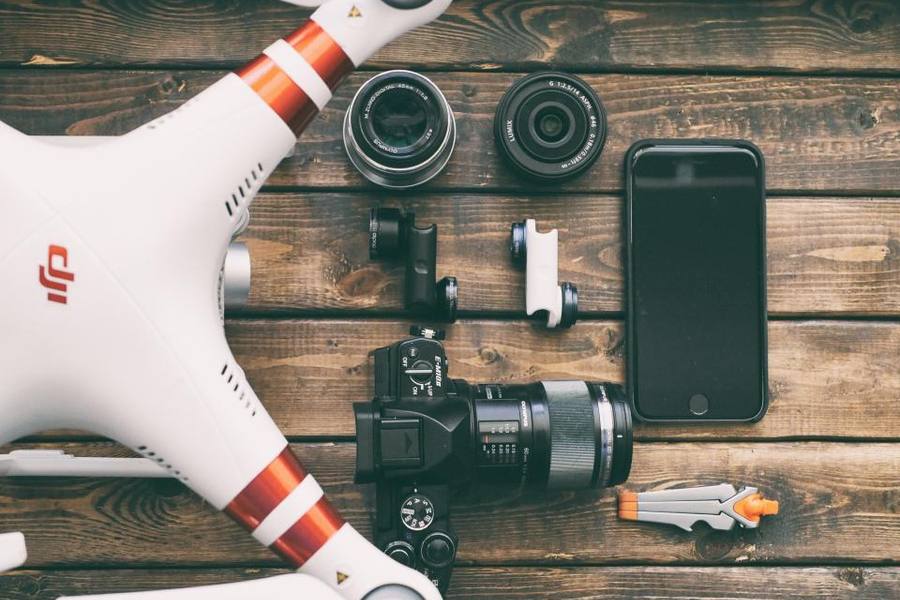
Symbolbild (Stockfoto); nicht das abgebildete Produkt.
The Mounts Are The Product
An action camera on its own is a small wide-angle camera. What makes it useful is putting it somewhere no other camera can go, and that is entirely a question of mounting.
A helmet, a handlebar, a surfboard, a car window, a dog harness, a chest strap — each produces a completely different kind of shot from the same camera.
Buying a varied mounting kit expands what the camera can do far more than buying a better camera does, and it costs a fraction as much.
Adhesive Mounts And Surface Preparation
Adhesive mounts hold surprisingly well when applied correctly and fail completely when not, and the difference is entirely surface preparation.
The surface must be clean, degreased with alcohol, dry and above a minimum temperature, and the adhesive needs a full curing period — usually twenty-four hours — before any load is applied.
Applying a mount and using it immediately is the commonest cause of a camera departing at speed, and that curing time is not a suggestion.
Tethers Are Not Optional
Any mount can fail, and a camera leaving a helmet at speed or a boat at sea is usually gone permanently.
A simple tether costs almost nothing and turns a mount failure from a lost camera into a dangling one, and for anything over water it is the difference between recoverable and not.
This is the accessory people skip and regret, and it is worth fitting as a default rather than deciding per situation.
Position Determines The Shot
Helmet mounts give a natural point of view and exaggerate head movement, which can be nauseating to watch.
Chest mounts are lower and steadier, showing hands and equipment, which for cycling and climbing is more engaging than a head view.
Mounting on a moving part of a bike or vehicle produces the most dramatic footage and the highest vibration, which even good stabilisation struggles with.
Legality And Safety
Helmet mounts can affect helmet certification and, in a crash, a rigid mount may create an injury risk — breakaway mounts exist for this reason.
Some jurisdictions restrict what may be attached to vehicles or helmets, and some venues and events prohibit cameras entirely.
Mounting anything to a car exterior needs particular care, since a mount failing at speed on a public road endangers other people rather than just your equipment.
Vibration damping is the other consideration people discover after reviewing footage rather than before shooting it. A rigid mount on a bike frame or an engine transmits high frequency vibration that electronic stabilisation cannot remove, and the result is a strange rippling distortion across the frame. Soft rubber mounting, or moving the camera to a less rigid part of the structure, addresses the cause where no amount of stabilisation can address the symptom.
The Verdict
The accessories that make an action camera worth owning, expanding what it can do far more cheaply than a better camera would.
Adhesive failures come from rushed application, helmet mounts carry genuine safety considerations, and the best footage positions are the highest vibration ones.
Always fit a tether, and let adhesive mounts cure for a full day. Those two habits prevent almost every lost camera.
Auf einen Blick
Vorteile
- Expand what the camera can do more than a better camera would
- Adhesive mounts hold extremely well when applied correctly
- Varied positions produce completely different kinds of shot
- Largely standardised across brands
Nachteile
- Adhesive fails completely if applied to a poor surface
- Rigid helmet mounts carry crash injury considerations
- Best footage positions have the highest vibration
- Some venues and jurisdictions restrict mounting
Häufig gestellte Fragen
Why did my adhesive mount fail?
Almost always surface preparation or curing time. The surface must be clean, degreased with alcohol, dry and warm enough, and the adhesive needs about twenty-four hours before any load. Using it immediately is the commonest cause of a lost camera.
Do I need a tether?
Yes, as a default rather than a decision. Any mount can fail, and a camera leaving a helmet at speed or a boat at sea is gone permanently. A tether costs almost nothing and turns a failure into a dangling camera.
Helmet or chest mount?
Chest is lower, steadier, and shows your hands and equipment, which for cycling and climbing is more engaging. Helmet gives a natural point of view and exaggerates head movement, which can be genuinely nauseating to watch.
Spezifikationen
| Type | Action camera mounting accessories |
| Adhesive preparation | Clean, degrease, dry, above minimum temperature |
| Curing time | Around twenty-four hours before load |
| Tether | Essential, not optional |
| Helmet mounts | May affect certification; breakaway types exist |
| Chest mount | Steadier and shows hands |
| Vibration | Highest on moving vehicle parts |
| Standardisation | Mounts largely cross-compatible |
Fazit
The mounts are what make the camera useful. Always fit a tether and let adhesive cure a full day — that prevents almost every loss.
Preis auf Amazon prüfen